
"I Think My Child Has Autism…" — A Guide for Parents Who Are Just Beginning to Wonder
At elemenoe, we sit with families at every stage of their journey. Some come to us with a diagnosis in hand, ready to build their child's support team. Others come with something quieter but just as powerful: a feeling, a question, a wondering that won't go away.
"I think something might be different.""Should I be concerned?""What if I'm overreacting… but what if I'm not?"
If you're reading this, you might be in that space right now. And we want you to know: your instincts matter. The fact that you're here, asking questions and seeking information, already shows how deeply you care about your child's well-being.
We created our newest resource, I Think My Child Has Autism… What Should I Do Next? A Parent's Guide to an Autism Diagnosis in Ontario, specifically for families in this early stage — the stage where you're noticing differences but don't yet have answers, where you're trying to figure out what's typical and what's worth exploring further.
Why We Created This Guide
Every week, we meet parents who share stories like these:
A mom who noticed her toddler wasn't pointing or waving like other kids at playgroup, but her family kept saying "boys talk later."
A dad who felt something was different about his daughter's play… she loved lining up her toys in perfect rows but rarely looked up to share the moment with him.
A parent who was told to "wait and see" by their doctor, even though their gut was telling them their child needed support now.
These families needed someone to listen. They needed practical information, validation, and clear next steps — without the overwhelm, without the jargon, and without judgment.
That's exactly what this guide offers.
What You'll Find Inside
This isn't a diagnostic checklist or a medical textbook. It's a practical, neuro-affirming roadmap for parents who are just starting to ask questions about autism.
Here's what it covers:
Understanding Autism
What autism actually is (and isn't), why early support matters, and how a diagnosis can open doors to helpful resources and funding.
Early Indicators to Look For
Clear, straightforward descriptions of common early signs in communication, play, social interaction, and sensory processing — with context that helps you understand what you're seeing.
Screening Tools Like the M-CHAT
What the M-CHAT screening tool is, when to use it, and what to do if it suggests your child may benefit from further evaluation.
Who Can Diagnose in Ontario
A breakdown of which professionals can provide an autism diagnosis in Ontario, and what the assessment process typically looks like.
You Don't Need a Diagnosis to Start
One of the most important messages in the guide: you can begin many helpful supports before a formal diagnosis. Speech therapy, ABA, and occupational therapy can all start early, and your clinical team can provide assessments and strategies while you're waiting.
Building Your Care Team
An overview of the professionals who can support your child — speech-language pathologists, behaviour analysts, occupational therapists, psychologists, and physicians — and how they work together.
Trusted Resources and Next Steps
Links to Autism Ontario, the Ontario Autism Program, community groups, and practical checklists to help you move forward with confidence.
The Reality of Waiting (and Why You Don't Have To)
We know that Ontario's waitlists for diagnosis and funded services can feel impossibly long. Many families wait - months but usually years - between noticing concerns, getting a diagnosis, and accessing Ontario Autism Program funding.
But here's what we want every parent to know: you don't have to wait to start helping your child.
Early intervention services like speech therapy, ABA, and psychotherapy can begin right away. Your clinical team can complete communication and learning assessments, provide you with strategies to use at home, and give your child more opportunities to build skills during those critical early years.
Starting early doesn't mean you're jumping to conclusions. It means you're giving your child support during a time when their brain is growing and learning most quickly, and that can make a real difference.
A Neuro-Affirming Approach
This guide is rooted in neuro-affirming care, which means we see autism as a natural variation in how people think, learn, and experience the world, not as something that needs to be "fixed."
Our goal isn't to change who your child is. It's to help them connect, communicate, and participate in ways that feel comfortable and meaningful to them. It's about building on their strengths, respecting their unique communication style, and giving you tools that make daily life easier and more joyful.
If you'd like to learn more about what neuro-affirming care looks like in practice, we invite you to listen to our podcast, Neurodiversally Speaking:
Trust Your Gut
One of the most important messages in this guide is this: you know your child best.
Parents are usually the first to notice differences in how their child plays, communicates, and responds to the world. If something feels off or different (even if others say "wait and see") it's reasonable to act on your concerns.
Document what you're noticing. Bring those observations to your doctor. Request screening or a referral. Your instincts are valuable data, and you deserve to be heard.
You're Not Alone
Wondering whether your child might be autistic can bring up so many emotions: worry, hope, confusion, relief, fear, love. All of those feelings are valid, and you don't have to navigate them alone.
There are caring, qualified professionals ready to support you. There are other parents who understand what you're going through. And there are clear, practical steps you can take right now to help your child thrive.
Whether this journey leads to a diagnosis or not, you're already doing something incredibly important: you're paying attention, asking questions, and seeking support. That matters.
Download the Guide
If you're in that early stage of wondering, we invite you to download our full guide:
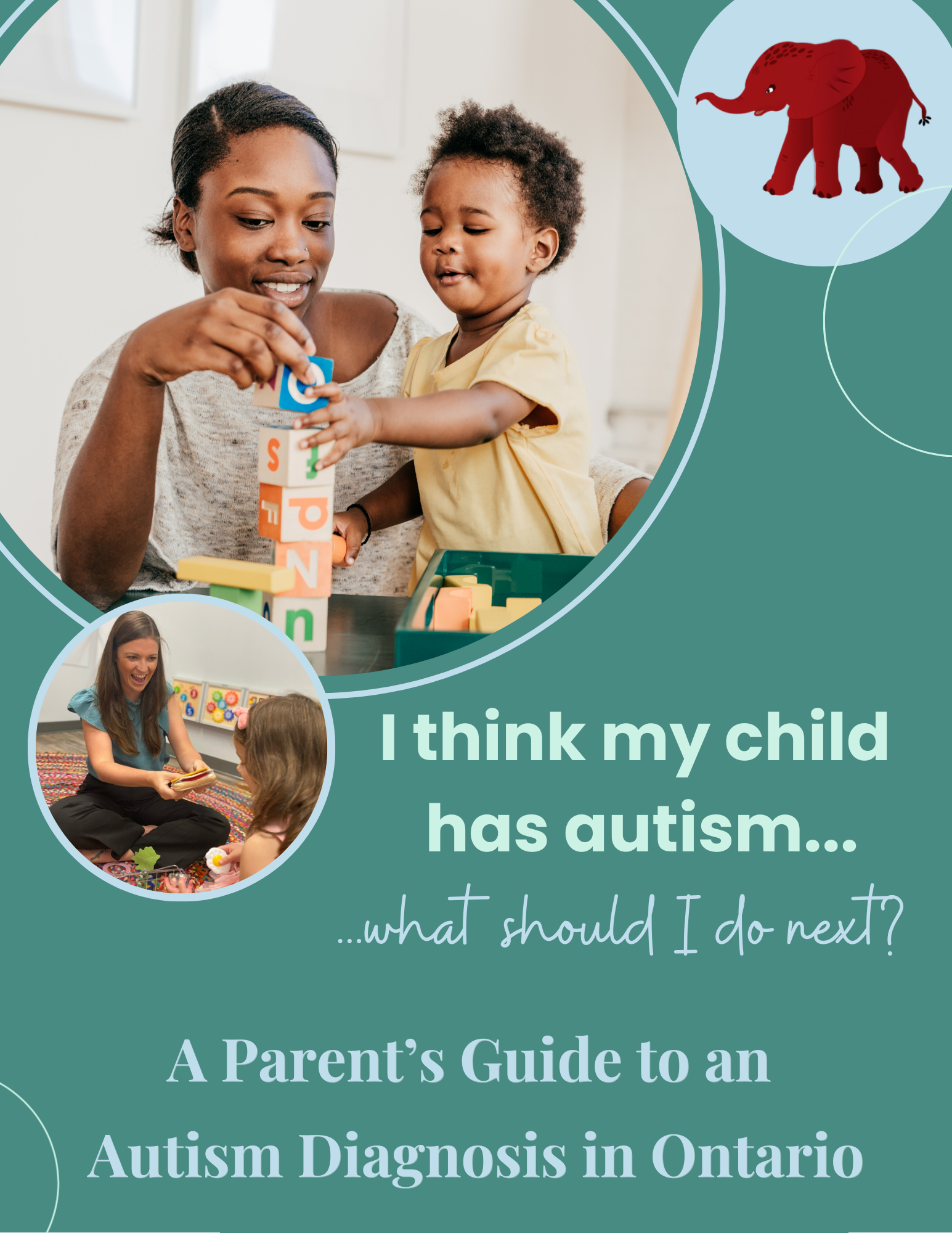
Free Parent Guide
You'll find clear information about early indicators, screening tools, who can diagnose in Ontario, how to access supports, and practical next steps — all written with empathy and real-world experience.
Because while this path can feel uncertain, you don't have to walk it alone.
If you're looking for collaborative autism therapy in Burlington or Waterloo, Ontario, we'd love to support you and your family. Contact us at info@elemenoe.ca or click here to schedule a free consultation.