
Handling Big Feelings: Supporting Emotional Regulation at Home
Your child melts down over a small change to the routine. They cry for fifteen minutes because their toast was cut the wrong way. They bite a friend at daycare over a toy dispute.
If you're a parent, you've been there.
All Kids Have Big Moments, But They're Worth Understanding
Every child has a meltdown at some point. It's part of growing up. But here's what matters: meltdowns aren't just something to accept and move on from. They're signals. Your child is telling you something, through their behaviour, that their needs aren't being met or they don't yet have the skills to handle what's happening.
When Shawna's 2-year-old started biting at daycare, it would have been easy to brush it off as "just a phase." But that behaviour was telling a story. It meant something specific was happening, something worth getting curious about.
The Bucket Metaphor: Understanding What's Really Going On
Imagine your child's emotional capacity like a bucket. Throughout the day, things fill it up: transitions, sensory input, big feelings, unmet needs, communication struggles, changes to routine.
When the bucket gets full, it overflows. That overflow looks like a meltdown.
Here's the thing: the meltdown isn't the problem. The full bucket is.
Some kids have bigger buckets. Some kids have more things filling their bucket throughout the day. Some kids need help learning how to empty the bucket before it overflows. But in all cases, the meltdown is telling you something real.
What's Actually Happening?
When your child has a big emotional moment, they're usually signalling one of two things:
Unmet needs. Your child needs something - connection, predictability, sensory input, a break, communication support - and doesn't have the words (or the ability) to ask for it directly.
Skill gaps. Your child doesn't yet have the skills to handle what's being asked of them, whether that's managing a transition, tolerating frustration, or expressing what they need.
Neither of these is a character flaw.
Get Curious, Gather Data, Seek Support
When meltdowns happen, the instinct is often to react in the moment. But the real work happens after: getting curious about what your child was trying to tell you.
Start noticing patterns:
When do meltdowns happen most often?
What comes right before?
What does your child seem to need in that moment?
Are there sensory, communication, or routine factors at play?
You don't need to be a therapist to do this. Just pay attention. Take a few notes. Look for what your child's behaviour is communicating.
If you're noticing frequent meltdowns and you're unsure what's driving them, that's exactly when it's worth reaching out to someone who can help, whether that's your pediatrician, a speech-language pathologist, a behaviour analyst, or a psychotherapist. There's no shame in that. In fact, it's the most supportive thing you can do.
The Goal Isn't Perfection
Your child will still have big feelings. That's healthy. The goal is to understand what those feelings are telling you, and to build skills—both for your child and for you—so that meltdowns become less frequent and less intense over time.
That's progress. That's what matters.
Want the full picture? Listen to our podcast episode "Handling Big Feelings: Supporting Emotional Regulation at Home" for the complete strategies, real-life examples, and coaching approaches we use with families every day.
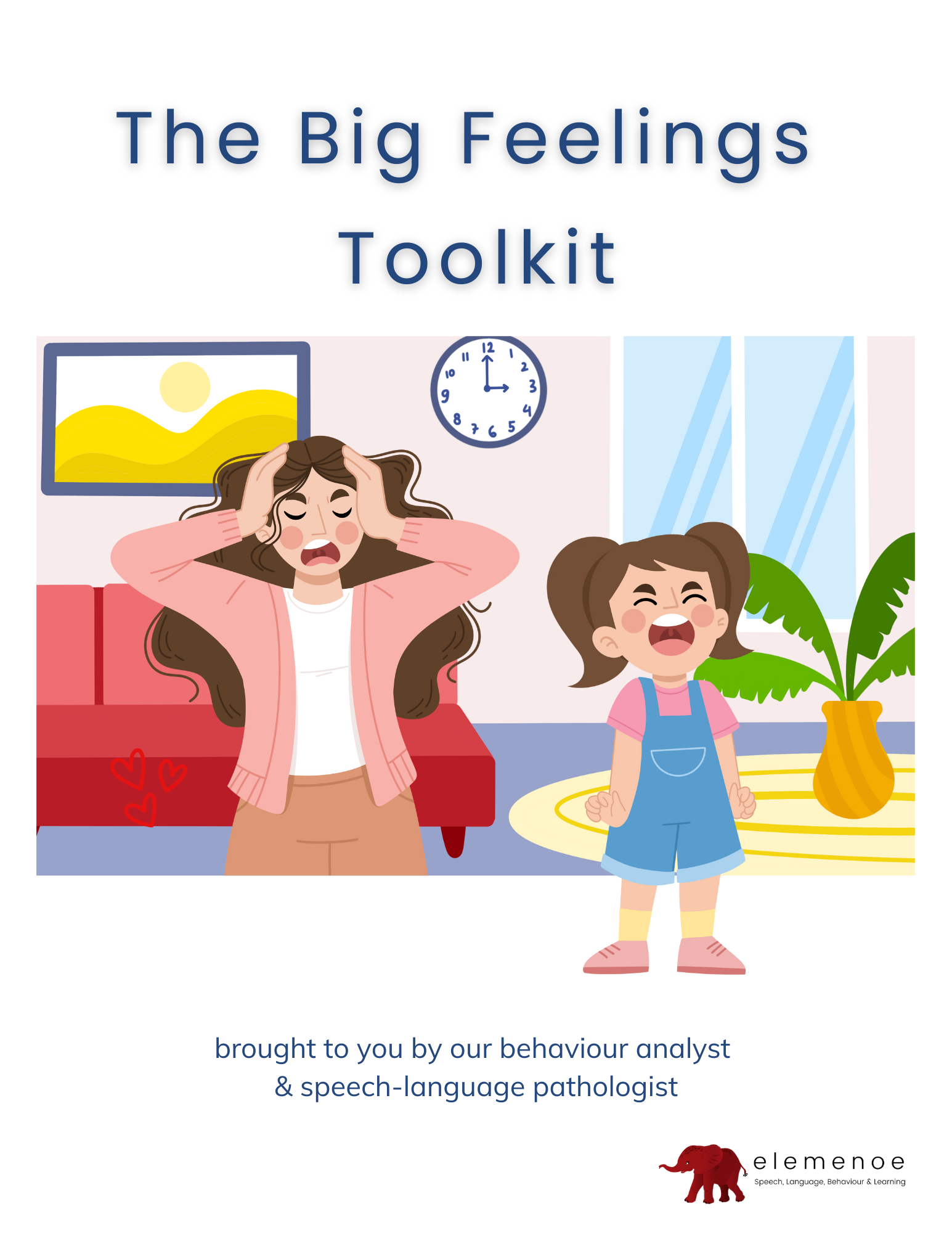
Want more? Download our FREE Big Feelings Toolkit now!
Free download